Assess the importance of either Berlin Vietnam
The following is an article by David Williamson published in the History Review (2003)
The Berlin Blockade, June 1948 - May 1949
With the economic integration of the British and American zones (Bizonia) in January 1947 and the announcement of Marshall Aid the following June the Americans had given notice that they were not ready to wait indefinitely for an agreement over a united Germany. The British Government, faced with subsidising its densely populated zone in north-west Germany at a time when Britain itself was nearly bankrupt, enthusiastically supported American plans for a self-governing and financially self-supporting West Germany. At both the Moscow and London Foreign Ministers’ Conferences in 1947, Ernest Bevin, the British Foreign Secretary, played a key role in preventing any last-minute agreement between the USA and USSR which might have delayed or averted partition. The decision to set up a West German state was finally taken at another conference attended by Britain, France, the USA and the Benelux states, which sat from February to June 1948 in London.
In the meantime the Russians were already beginning to hint at the pressure they could exert on the Allied position in Berlin by interfering with western Allied inter-zonal traffic, and in March 1948 they walked out of the Control Commission and broke off discussions on the introduction of a single currency for the whole of Germany. Over the next two months the Western Allies prepared for the coming trial of strength. Broadly speaking, the British military authorities on the ground adopted a cautious waiting policy, which did not rule out eventual evacuation, while General Lucius Clay, the American Military Governor, argued that the Allies should stay in Berlin come ‘hell or high water’. Essentially this line was supported by Bevin, who stated in the House of Commons on 4 May 1948 that ‘we are in Berlin as of right and it is our intention to stay there’.
In June the Soviets were dealt a double blow to their German policy: on the 7th the Allies announced the decision to create a West German state. On the 20th the new Deutschmark currency was introduced into the western zones and three days later into the western sectors of Berlin. Stalin believed that he could force the Western Allies to drop their plans for a West German state by blockading West Berlin. Consequently on the night of 23-24 June all rail, road and canal links to the west, as well as power supplies from the eastern sectors, were cut.
Although the Russian action was no surprise, the initial Western response was confused and unsure. The French were convinced that West Berlin could only hold out for a matter of weeks, while the American administration, to quote Avi Shlaim, ‘seemed almost paralysed by uncertainty and fear’, even though Lucius Clay was pressing for the immediate dispatch of armed convoys to West Berlin. It was again Bevin who provided the initial leadership and steadied the nerves of his allies. His intention was to maintain the Western position in Berlin and set up a West German state without risking war. The means to achieve this was the airlift.
An airlift was an obvious way of buying time, but nobody envisaged at that stage that it would eventually be able to supply the whole of Berlin more or less indefinitely. The idea of supplying the civil population by an airlift was first suggested by Air Commodore Waite of RAF headquarters, Berlin. Bevin seized on the idea enthusiastically and convinced the Americans that West Berlin could be supplied by aircraft flying along the three ‘corridors’, or flight paths, allocated to the Western Allies by the Soviets in 1945. The Americans also transferred 60 B-29 bombers to East Anglia. It was rumoured that these carried atomic bombs, but in fact this was bluff, as the modified B-29s, which could carry them, only arrived in Britain in 1949. Possibly this deterred the Soviets from trying to interfere with the airlift, although there is no evidence that Stalin was at any time ready to risk war.
By late summer 1948 the success of the airlift was still far from certain. The Western Allies were consequently ready to explore the possibility of reaching an agreement with Stalin, who interpreted their approach as a sign of weakness. He uncompromisingly demanded that not only should the decision to set up the West German state be revoked but that the Deutschmark should be withdrawn from West Berlin and replaced by the new Soviet Ostmark, the currency the Russians had introduced into their zone. Essentially, as one Soviet official remarked, Stalin’s aim was
to restore the economic unity of Berlin, to include all Berlin in the economic system of the Soviet Zone and also to restore unified administration of the city. That would have served as a basis for winning over the population of West Berlin, and would have created the preconditions for completely ousting the Western powers from Berlin.Not surprisingly the talks ended on 7 September without any result. The Soviets, convinced that the airlift to West Berlin could not be maintained over the winter, decided to play for time and avoid any compromise. The winter of 1948-9 was, however, exceptionally mild, and thanks to the effective deployment of the large American C54s, which flew to Berlin from bases in the British Zone, the average daily tonnage for January was 5,620. By April 1949 this had reached 8,000 tons per day, and about 1,000 aircraft were able to use the air corridors to Berlin at any one time. Consequently Stalin, unless he was ready actually to go to war over Berlin, had little option but to cut his losses, and in early May he called off the blockade.
West Berlin: Capitalist island in Communist Sea
The failure of the blockade led, as the American diplomat George Kennan predicted, to ’an irrevocable congealment of the division of Europe into two military zones: a Soviet zone and a US zone’. In the West the Federal Republic (FRG) was set up in August 1949, and two months later Stalin gave the go-ahead for the formation of the German Democratic Republic (GDR). By the time of the Geneva Conference in July 1955 the Cold war division of Europe was consolidated. On the one side were the NATO states to which West Germany now belonged, and on the other were the Warsaw Pact States which the GDR was in the process of joining. Churchill’s Iron Curtain had become a reality.
Yet there was one anomaly - West Berlin. The failure of the Soviet blockade ensured that Berlin became a divided city within a divided state within a divided continent. At the end of November 1948 the Germans in West Berlin in response to threats and intimidation from the SED, the East German Social Unity Party, had set up their own city government with an elected assembly, which had an overwhelming anti-Communist majority. Britain, France and the USA permitted West Berlin to send representatives to sit in the West German parliament in Bonn, but, as the city was still legally under Four Power control, they had no voting rights. There was as yet no physical barrier between East and West Berlin, although the Soviet sector became the capital of the new GDR.
It was through this gap in the Iron Curtain that thousands of east Germans fled to the West - in the first six months of 1953 it was estimated that possibly as many as 426,000 left the GDR. West Berlin also became an important outpost for the West: the American radio station RIAS was based there, as well as many US, West German and Allied intelligence agencies. In June 1953, when strikes and demonstrations broke out first in East Berlin and then spread like wild fire throughout the GDR, RIAS played a key role in informing the East German population about what was happening and in prolonging the unrest.
Berlin Crisis, 1958-61
Although the GDR had the most developed economy and highest standard of living in the Communist bloc, it remained a fragile and artificial state totally dependent on Moscow and the presence of 20 divisions of Russian troops stationed within its frontiers. It was confronted with a prosperous West Germany, the apparently miraculous economic recovery of which inevitably attracted many of its youngest and most ambitious citizens. Through the open frontier in Berlin it was still possible to flee from the drab life of Socialist planning and rationing to the bright lights of the FRG. Between 1945 and 1961 about one-sixth of the whole East German population had fled westwards. To stop this exodus Ulbricht, the East German leader, was determined to overtake the FRG ‘within a few years ... in per capita consumption of all important food items and consumer goods’. Yet to achieve this, it was essential to stop skilled workers and professionals fleeing in large numbers. This meant that something had to be done about the status of West Berlin.
By the autumn of 1958 Soviet leader Nikita Khrushchev was increasingly confident that the USSR could force the USA into making concessions over both West Berlin and the whole German question. By exaggerating the extent of Soviet nuclear power and by putting pressure on West Berlin he was sure that he could force the Western Allies to sign the long delayed peace treaty with both Germanys, which would ensure recognition of the GDR and its postwar frontiers with Poland. In November he therefore called for a peace treaty with the two German states and issued a six month ultimatum demanding the demilitarisation of West Berlin, the withdrawal of Western troops, and its change of status into a ‘free city’. If the Western Allies refused to sign a peace treaty with the two German states, he threatened to conclude a peace agreement with the GDR alone and to recognise its sovereignty over East Berlin, which was in theory but not, of course, in practice still under four power control. The Western Allies rejected the ultimatum, but agreed to discuss ‘the German question’ in a foreign ministers’ conference scheduled to meet in Geneva in the summer of 1959.
Predictably, no agreement was secured. Over the next two years Khrushchev alternated periods of détente with spells of acute tension during which further threats were devised, to force the West into making concessions over the status of Berlin and the future of Germany. His actions were not without effect. Behind the scenes, in London, Washington and Paris, plans for creating a nuclear free zone in Central Europe, recognising both the GDR and Poland’s Western frontiers, were considered quite seriously. Whether the Western Allies would in fact have made any important concessions remains a hypothetical question, as Khrushchev used the shooting down of an American spy plane over Russia as an excuse to torpedo a proposed summit meeting.
Construction of the Berlin Wall
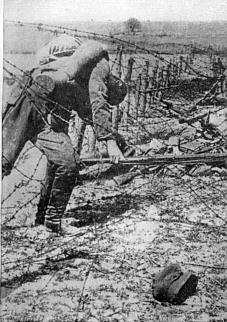
When John F. Kennedy took up the Presidency in January 1961, he refused to make any concessions to Khrushchev, but his response to Russian threats to West Berlin indicated a possible solution to the Berlin problem. In a television broadcast on 25 July 1961 he stressed that the USA was mainly interested in free access to West Berlin rather than to Berlin as a whole. Up to this point Khrushchev had consistently rejected the option of closing off the East Berlin frontier. He had hoped to uncouple West Berlin from the West rather than to cut it off from East Germany. He thus rejected the increasingly shrill demands from Ulbricht, the East German leader, for a separate treaty with the GDR because he still wished to keep the door open for a four power agreement on Berlin as a whole. However, the growing unrest in the GDR caused by the forced collectivisation of agriculture and the ever increasing number of refugees to West Germany finally persuaded him that something had to be done to prevent an East German collapse. After a meeting of the Warsaw Pact states in Moscow on 3-5 August 1961, the decision was taken to close off the East Berlin frontier. In the early morning of 13 August the operation was efficiently and swiftly carried out. At first the border was sealed off with barbed wire; but when no Western countermeasures followed, a more permanent concrete wall was constructed.
By tolerating these actions, the Western Powers in effect recognised East Germany. The Wall both consolidated the GDR and ensured that the Soviet Union was still responsible for maintaining international access to West Berlin.
The prolonged crisis over Berlin effectively ended with the construction of the Wall, although this was not immediately obvious at the time. The Soviet Union renewed nuclear testing and tension remained high in Berlin. American troops ostentatiously practised tearing down simulated walls, while on 27 October 1961 Soviet and American tanks stood almost muzzle to muzzle for several hours at Check Point Charlie, one of the few access points through the Wall. Khrushchev was still determined to keep up the pressure on West Berlin. In October, for instance, he told the Soviet Foreign Minister, Gromyko, and the Polish leader, Gomulka, that ‘we should ... exploit the weakness of the enemy. We should strive to remove the official representatives from West Berlin’.
In a series of talks with the Soviet leaders over the next year American diplomats attempted to lower the tension by exploring the possibility of an agreement over Berlin which would guarantee the rights of the Western Allies, whilst recognising what Kennedy called the ‘legitimate interests of others’. By this, of course, he meant the USSR and GDR. In October 1962 the Cuban crisis temporarily forced the Berlin question into second place but, once it was resolved peacefully, discussions on Berlin continued, although the need to find a settlement was no longer so urgent. Having come so close to nuclear war in Cuba, Khrushchev shied away from another confrontation in Berlin and accepted that for the time being the Wall had consolidated the GDR.
Consequences of the Crisis
The Berlin Wall saved the GDR from collapse and gradually compelled both the NATO and West German Governments to face reality and accord the GDR legal recognition. Once Willy Brandt, the former Social Democrat Lord Mayor of West Berlin, became the FRG’s Chancellor in 1969, he was determined to accept the ‘political situation as it exists in Europe’, which involved not only the recognition of East Germany but also of the post-1945 Polish and Czech borders. To secure these major concessions the Russians were ready in their turn to recognise the special status of West Berlin with its ties to the FRG, to renounce any attempts to interfere with traffic between West Berlin and the FRG, and allow West Berliners to visit East Berlin ‘under conditions comparable to those applying to other persons entering these areas’. In return the Western powers agreed that the western sectors of Berlin were not legally part of the FRG (even if in practice they had been since 1950) and that consequently Bonn should avoid holding provocative federal ceremonies there such as the election of the President of the FRG.
Collapse of the Berlin Wall
Brandt’s Ostpolitik (eastern policy) did much to defuse the tension between the two Germanys but it did not lead to the demolition of the Berlin Wall, which was still needed to prevent the mass flight, particularly of young and ambitious East Germans, to the more dynamic economy of the West. Only with the coming to power of Gorbachev, who was determined to end the Cold war, was pressure put on the GDR to liberalise.
Once this process started in the autumn of 1989, an uncontrollable momentum built up for further reforms, especially the right to travel to the FDR. In October a reformist government under Egon Krenz was formed, and on 9 November - in a desperate attempt to rally support - this conceded to all GDR citizens with a passport the right to an exit visa valid for any frontier crossing including Berlin. This was supposed to take effect from the morning of 10 November, but it was announced prematurely to a press conference on the evening of the 9th, and at 11 pm the border guards facing a crowd of 20,000 opened up the crossing points, which were never again closed. Within days the Wall had become an historic curiosity and in February 1990 its demolition began. The fall of the Berlin Wall became the symbol of the popular revolutions that ended Communist power in eastern Europe.
Conclusion
Berlin was the symbol of the Cold War, but also the point where the western Allies were at their most vulnerable. To stop them setting up a West German state in 1948, a blockade of West Berlin was the obvious measure for Stalin to take. Militarily it made sense for the Western Allies to pull out from such an isolated outpost, but if they had, they would have lost credibility as protectors of the West German state and abandoned the West Berlin population to the USSR and their East German allies. Contrary to expectations in both East and West, the Airlift succeeded, and the West German state was formed. Like so much of the subsequent Cold War in Europe the protagonists were shadow boxing. Stalin had no desire to risk war and therefore the Soviet airforce was never allowed to interfere with the airlift.
The first Berlin crisis ended in complete failure for Stalin, but the second crisis was at least a partial success for Khrushchev. Admittedly, he too failed to force the Western Allies to withdraw from West Berlin or to negotiate peace treaties with the two Germanys. On the other hand, with the construction of the Berlin Wall he consolidated the GDR and showed that the West was not ready to do more than defend its position in West Berlin. The subsequent long period of détente in Europe rested firmly on the status quo in Germany and Berlin, which was underwritten by what was perceived to be nuclear parity between the superpowers. Only when Russia was no longer strong enough to maintain this did the East German state crumble and Berlin eventually become once again the capital of a united Germany.
Timeline:
1945 | February | |
1948 | 7 June | The London Six Power Conference recommends setting up a West German state |
20 June | Currency reform in western zones | |
24 June | ||
1949 | 12 May | |
1958 | 27 November | Khrushchev's |
1961 | 13 August | |
1971 | 3 September | Four Power Treaty on |
1989 | 9 November | |
1990 | 3 October |
- Why did the Soviets decide to blockade West Berlin in June 1948 and then to end their action in May 1949?
- To what extent did the construction of the Berlin Wall lower the temperature of East-West rivalries?
- Was tension over Berlin after 1945 a cause or a symptom of the Cold War, or both?